I am the one who overcame.
But recently, I have come to realise that there was one identity leading the way. An identity unlabelled until it revealed itself.
And it’s obvious now. I can see how it exists. I can also see I have relied on this far more than I thought, in my work, my writing, and the way I show up in the world.
That my “survival” story of sorts has done just that, helped me survive and come out the other side.
I embody many identities, as I believe we all should.
But if I stop being her, the one who overcame, then who do I become?
This is not just about disability, although it’s been the biggest part of the problem.
It goes back to before then. A self-identified validation seeker. Becoming disabled just allowed me to lean in. I felt seen. And I felt celebrated.
In a world of social media, this translates into likes, claps, and applause for showing up. I got a taste of the glory for simply being me, and I liked it. I started to feel special and different because of my disability.
Every like on a post felt like another person applauding my hard work. So I found ways to work harder. One challenge after another, physically, mentally, or emotionally. I’ve pitched myself as strong, and now it must fit the narrative.
In society, we use our stories and our pain as currency, and it’s come to my attention that as a speaker, I’m exploiting my own.
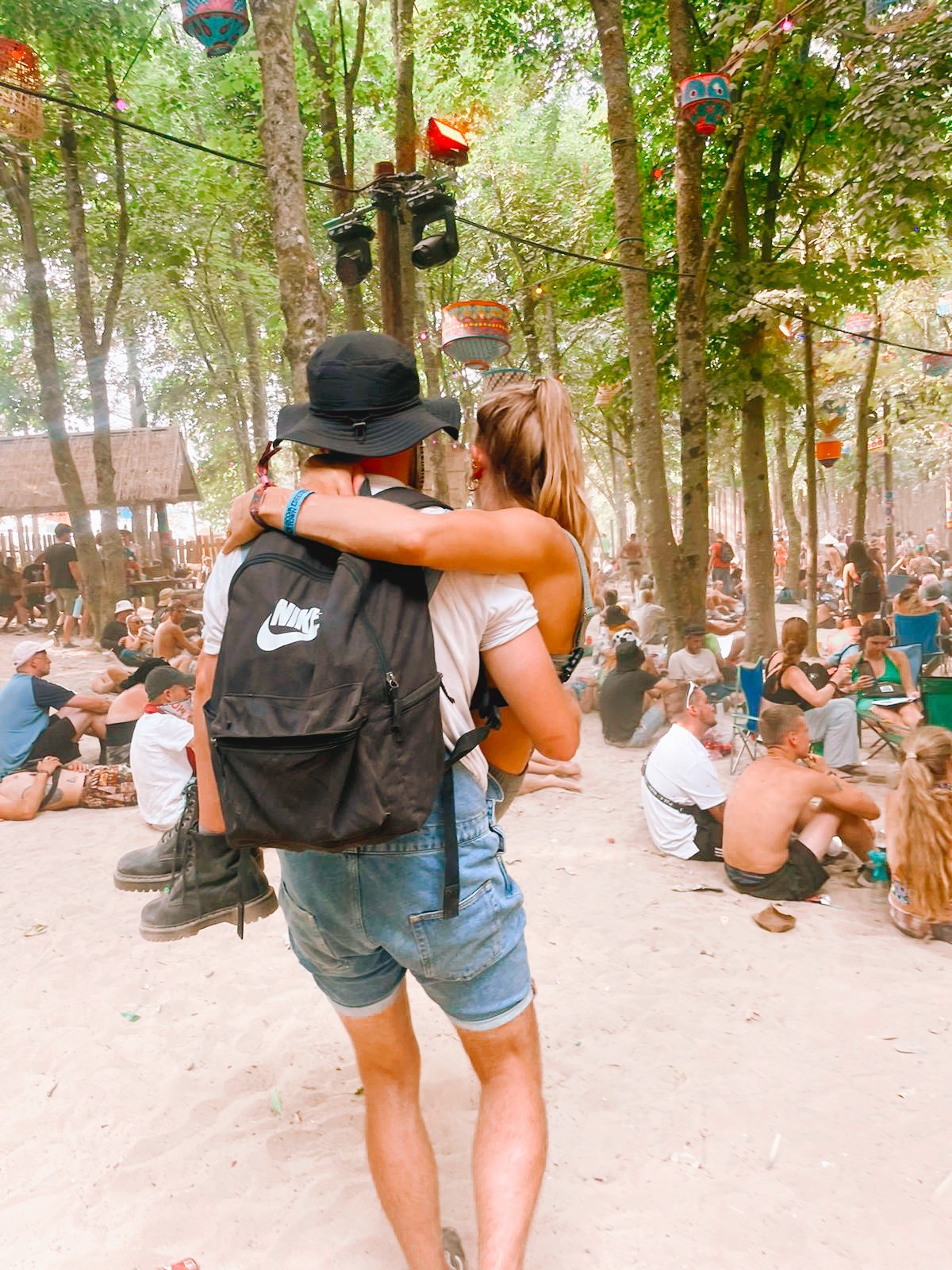
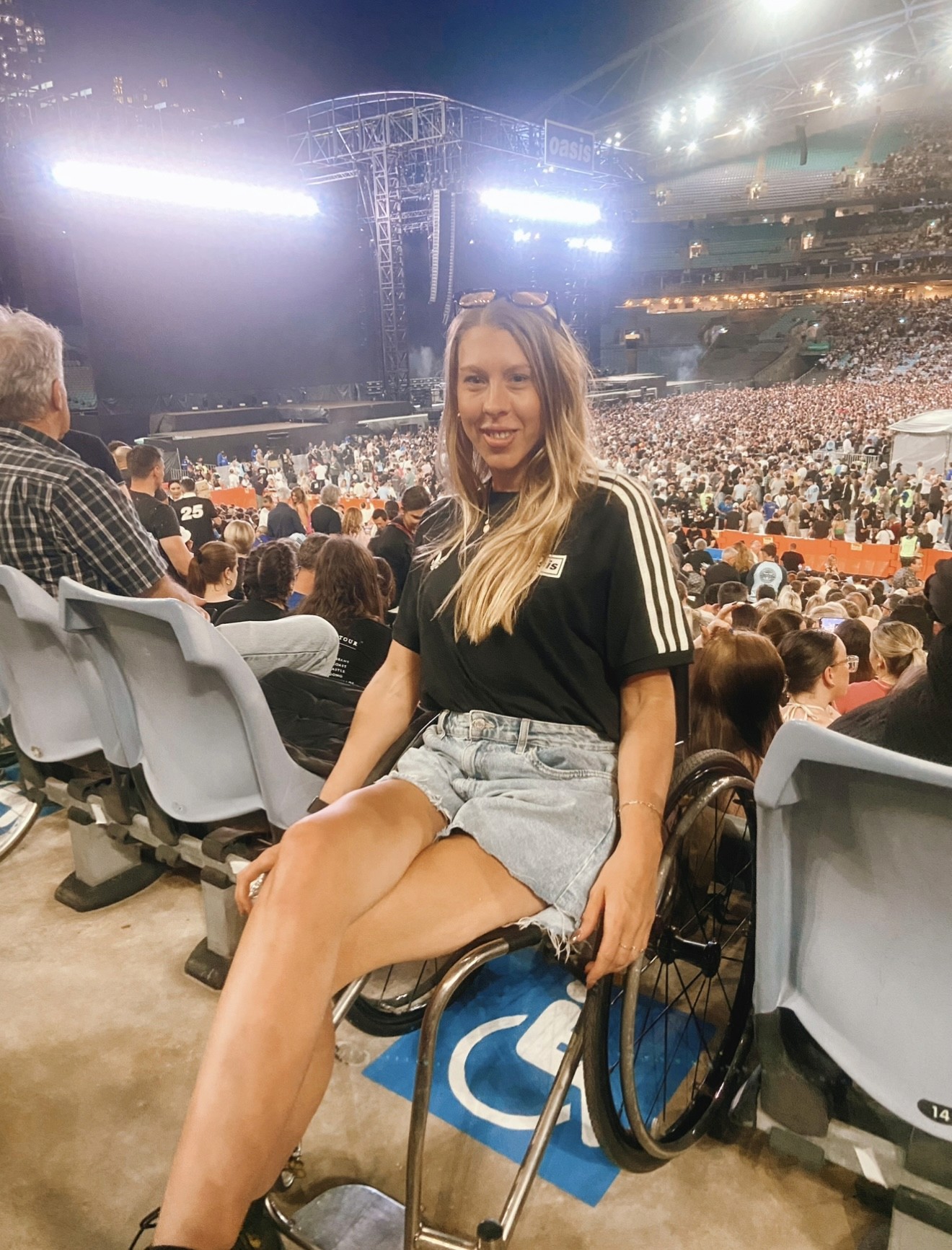
I justify that if I’m forced to relive my trauma on the side of a street, or at a festival for someone else’s curiosity, why can’t I lead with it?
Take my story back for myself.
Tell it my way, in my words, to those I choose, and yes, capitalise on it in a way that serves me.
But somewhere along the way, my self-worth got tangled up in my story.
I slowly became tied to what I had survived.
It was no longer about who I was as a human, but what I had done.
When we travelled, my entire connection to others came from that vulnerability.
My trauma is literally a currency for quick connections in the hostel bar. It felt transactional. I’ll say mine, and you say yours. A bond is formed.
And when you’re far away from home and the people you love, you crave connection at any cost. But it perpetuated the story of being strong. The cycle continued.
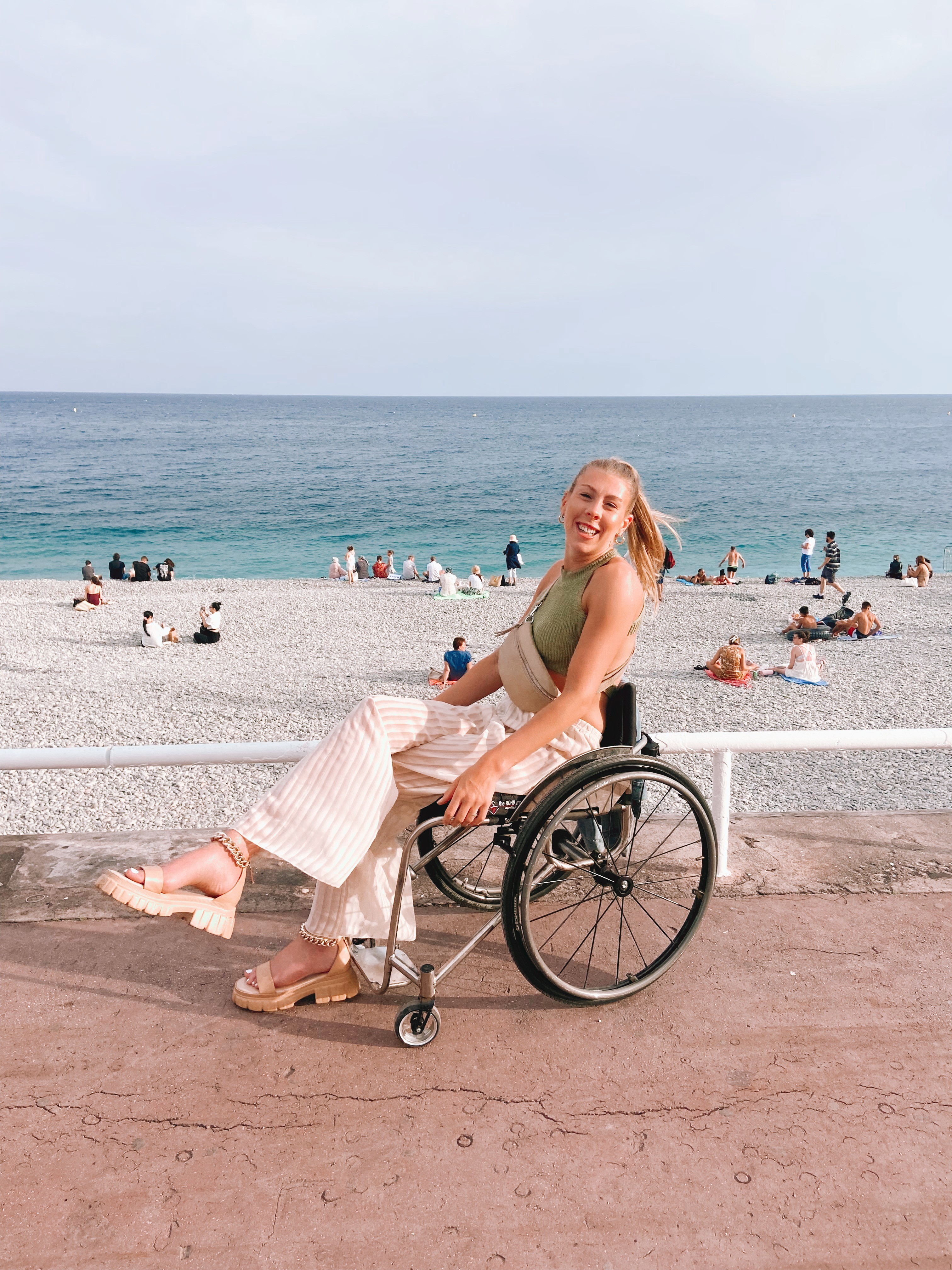
And now the identity that I embody on stage, the one forged in adversity and trauma, in bouncing back and backpacking the world.
It’s not just me. All over Instagram, healing is a performance piece. I am no different; the irony must not be lost. I am part of the ableist problem.
It was my survival strategy, and it served me so well.
When I stand on stage and tell my story, it sells because overcoming is something we can all understand.
I feel seen. I feel powerful. But I am also starting to feel like there is more to me than that.
It’s there in the quiet after the performance stops.
I don’t need another challenge to rise to or another box to tick. Instead, I need to learn how to be, or do the things that are just for me.
But ease and enjoyment of life feel suspicious, because I’ve taught myself that I’m someone who does hard things, and an identity anchored in effort will never allow me to live a life of ease.
I will always be looking for what’s next.
And I find myself thinking I might be manufacturing hard things to push through. Simply creating more stories to share.
Or worse still, am I subconsciously looking for ways to prove my worth? Not despite my disability, but because of it.
What if I like being the one who overcame, and I’m not ready to let her go?
My identity serves the business. But does it still serve the person?